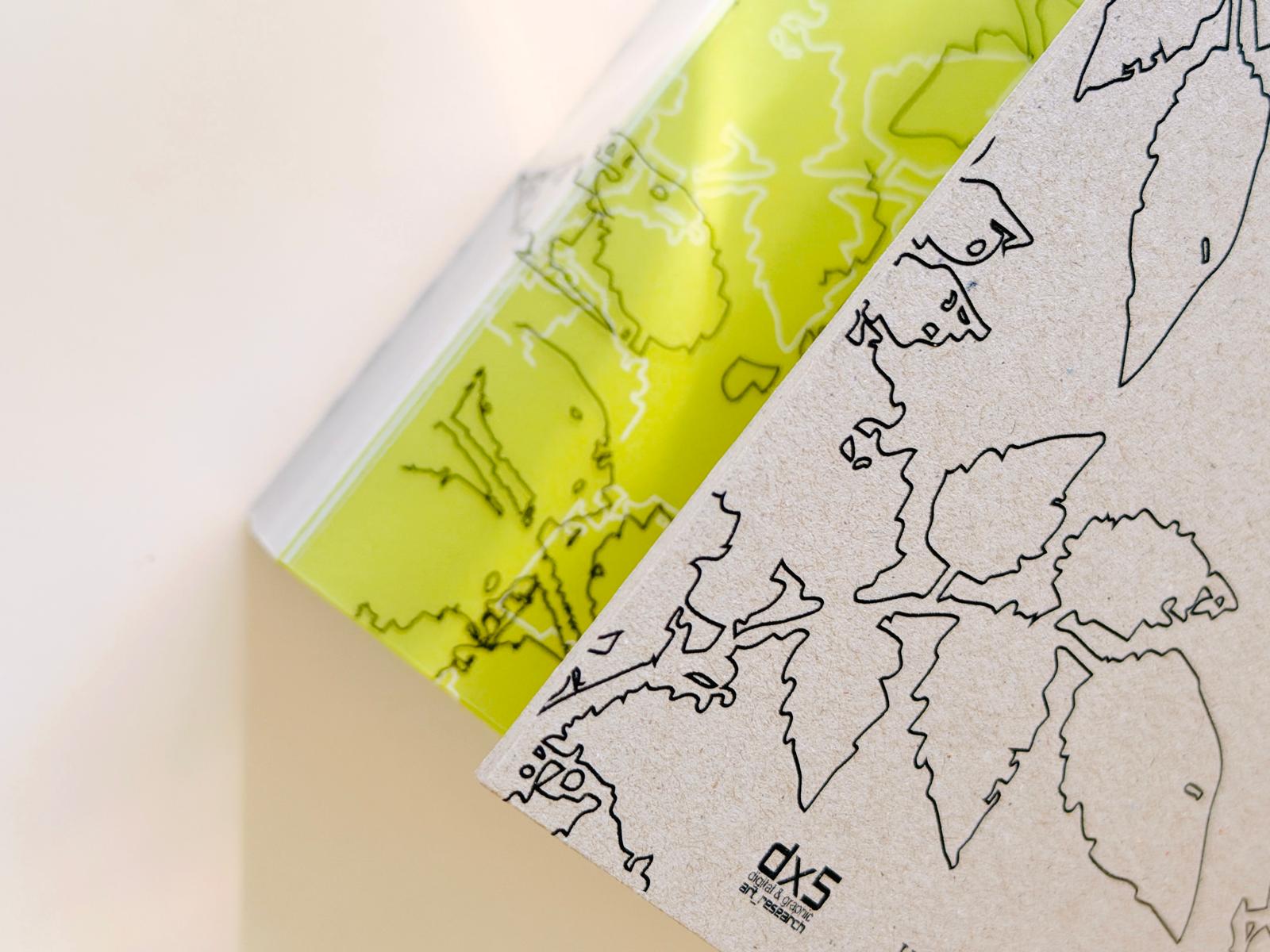
_Biocreative Responsabilities and Sensibilities
Metodologías situadas para imaginar comunidades más-que-humanas
_ topics
_ research areas
_Biocreative Responsabilities and Sensibilities
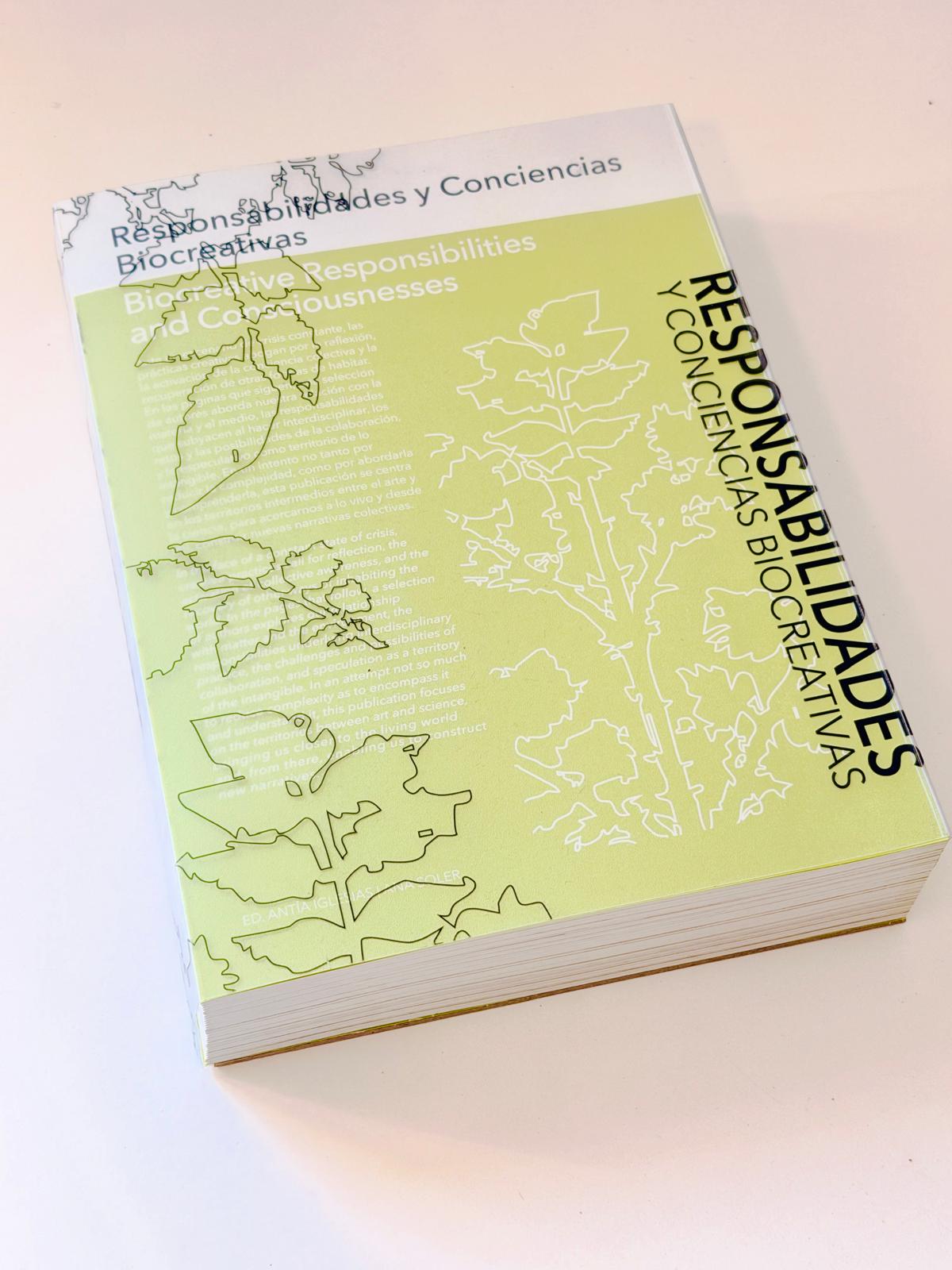
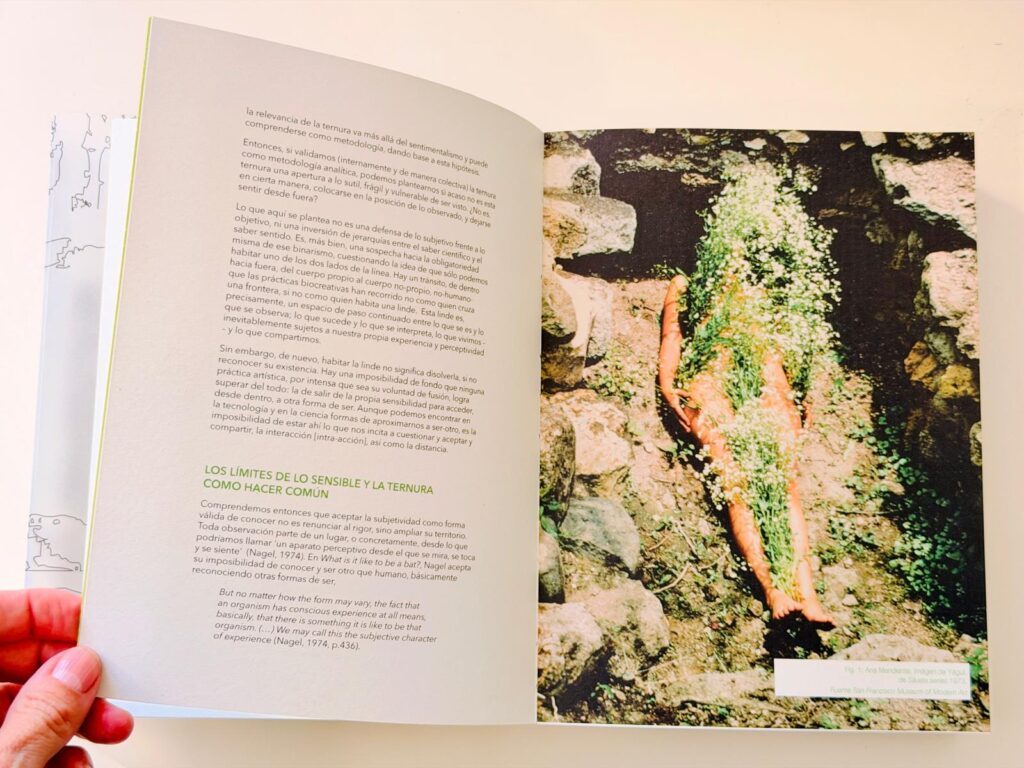
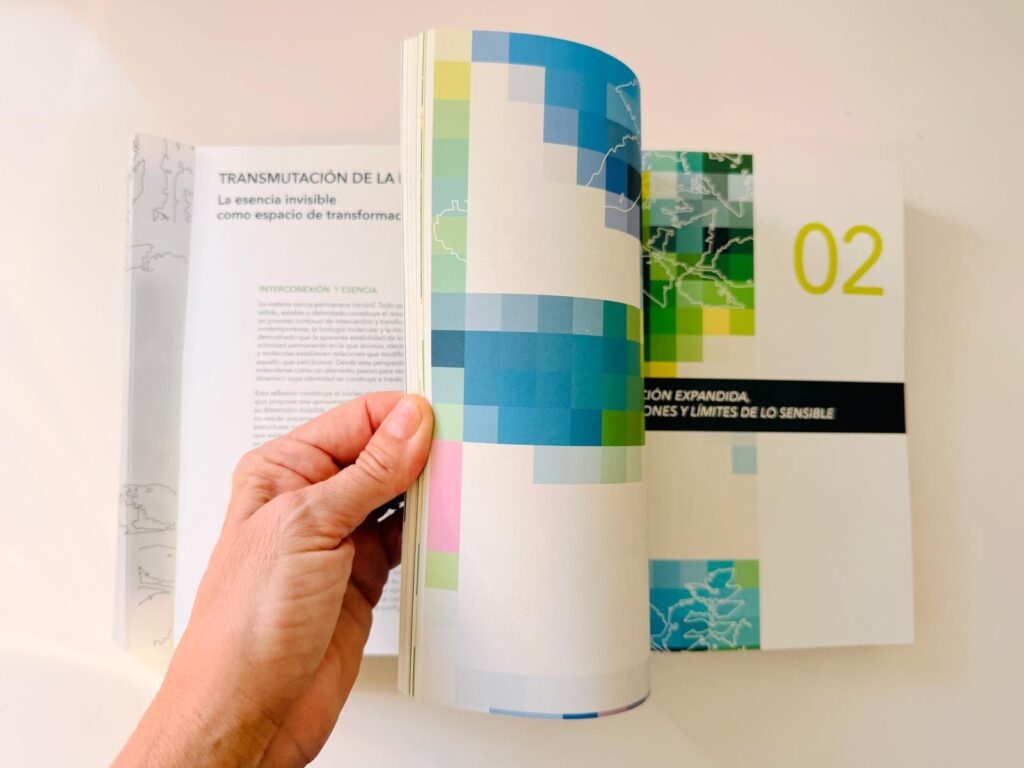
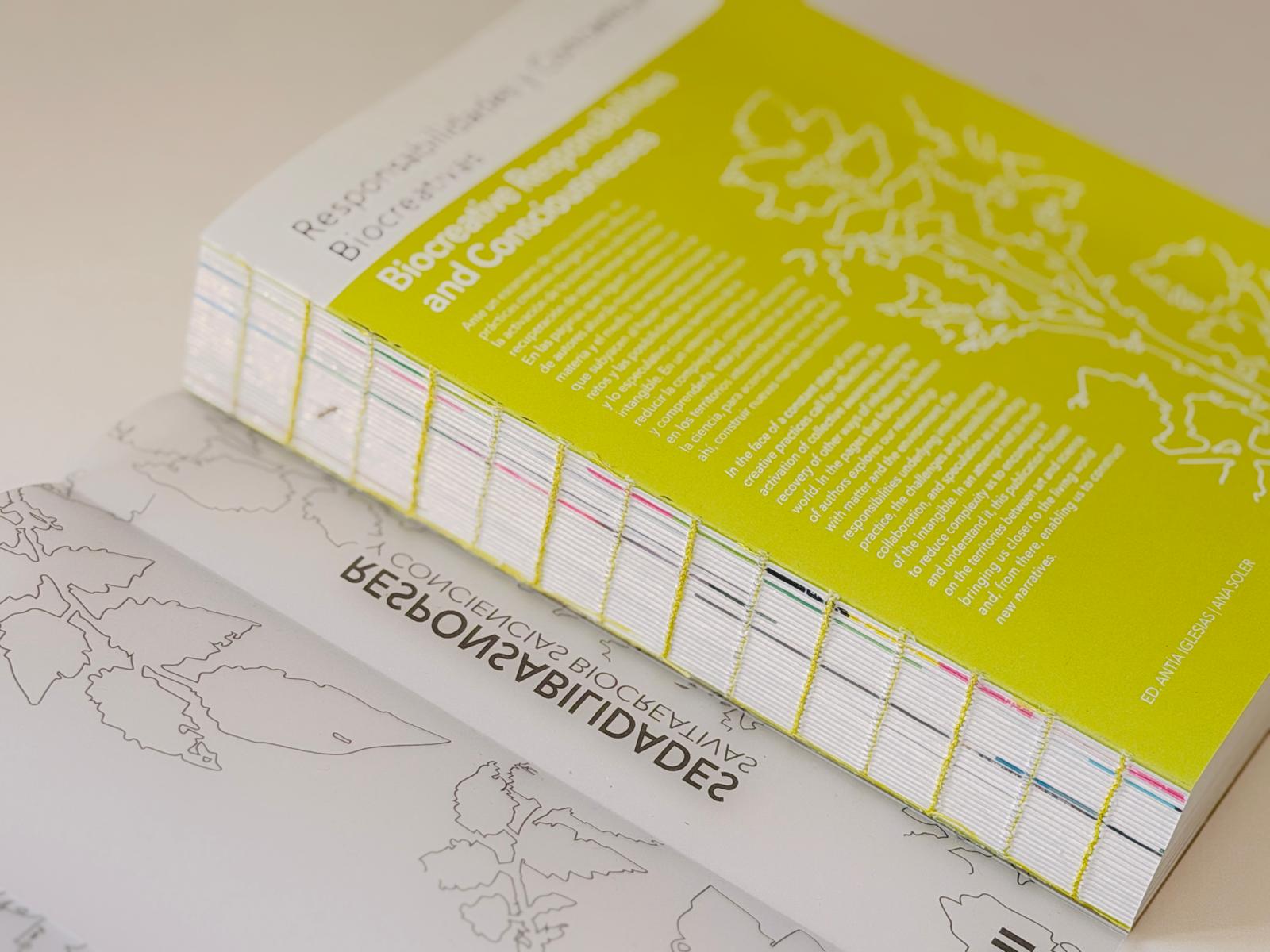
Biocreative Responsibilities and Awareness is the second volume in the series emerging from the international Art at the Edge of Nature gatherings. It offers a critical reassessment of the position of the human subject within creative and research processes, approaching the ecological crisis as an epistemological, ethical, and material challenge. The volume brings together 29 contributions from a wide range of fields, including architecture, sculpture, forest engineering, plant genetic resource conservation, interaction design, painting, and artificial intelligence. All of them regard artistic practice as a legitimate mode of knowledge production, capable of engaging with science on equal terms. Throughout its pages, the book explores topics such as biomaterials and mycelium, speculative herbaria, coral reef restoration, housing as a shared biome, territories shaped by extractivism, and artworks that transform alongside the organisms that inhabit them. From this diversity of perspectives, the publication advances beyond its predecessor, Interdisciplinary Posthumanisms in Art and Science, shifting the focus from diagnosis to methodology. It asks not only what to think about nature, but how to work with it, while experimenting with forms of responsibility toward matter, living organisms, and the territories with which we share the world.
_origins
The volume brings together the reflections emerging from the fourth edition of Art at the Edge of Nature, held on 21 and 22 May 2026 at La Trasera, within the Faculty of Fine Arts of the Complutense University of Madrid. The series was launched in New York in 2024 and held its first Spanish edition in Pontevedra in 2025. On this occasion, it moves to Madrid and expands its interinstitutional network through collaboration with the research groups Artistic Practices and Contemporary Forms of Knowledge (GIPAFCoCo-UCM) and Sustainability, Art and Science (SCIART-UCM). The event is promoted by the research group Dx5 Digital and Graphic Art_research, through its New Materialities and Ecologies research line, and by the AF4 Agroforestry Engineering group, through its Bioresources and Art-Science Initiatives line, both at the University of Vigo. It is supported by the CREA Grant for the Organisation of Conferences and Scientific Meetings, with structural funding from the Dx5 group (GRC ED431C 2025/42) and AF4 (GPC ED431B 2025/036), and by the R&D project The Good Arts of Living with Others “Through” Design (PID2024-158514NB-I00).
_focus
The publication is structured around four conceptual strands that mirror the organisation of the symposium: responsibility toward matter and its agency; expanded perception and the limits of the sensible; disciplinary overflows and more-than-human methodologies; and explorations toward an ethics of co-habitation. Across these themes, knowledge is understood as a situated practice inseparable from the relationships that make it possible, while creation is conceived as a shared process involving non-human agents that shape, redirect, and co-constitute its outcomes. The voices of established researchers are presented alongside those of doctoral candidates, following the format of the gathering itself, which sought to foster horizontal exchange across generations. Each section concludes with a collective conversation drawn from the corresponding roundtable discussion. In this way, the volume also functions as an archive of thought developed collaboratively, where the biocreative emerges as a space of negotiation among species, materials, and forms of knowledge.
_Expanded Multiple Art and Biocreative Practices
Drawing on the traditions of expanded graphic art and the artist’s multiple, the research line New Materialities and Ecologies seeks to broaden conventional notions of originality and reproduction, material agency, and the implications of creative practice beyond the human entity. Biocreative practices likewise operate through repetition, replication, and variation, but from living matrices: seeds that reproduce themselves, mycelia that grow according to a mould, bacterial cultures that regenerate, digital herbaria constructed through photogrammetry, or images composed of layered superimpositions. Each work thus manifests itself simultaneously as series and singularity, while authorship becomes distributed between the creator and the organisms and materials that participate in its making.
_about the contents
The volume opens with The Multiplicity of the Living, a reading guide in which Ana Soler and Antía Iglesias introduce the publication’s four thematic strands and the rationale behind its structure.
The first section, On the State of the Question, brings together the contextual contributions of the organising committee. Antía Iglesias proposes tenderness as a biocreative methodology, grounded in the cognitive distance that separates species. José Carlos Espinel reflects on the agency of matter and on listening, negotiation, and co-creation as modes of artistic practice. Meanwhile, Santiago Morilla outlines the foundations of an ethics and aesthetics of cohabitation based on care, shared responsibility, and more-than-human sustainability.
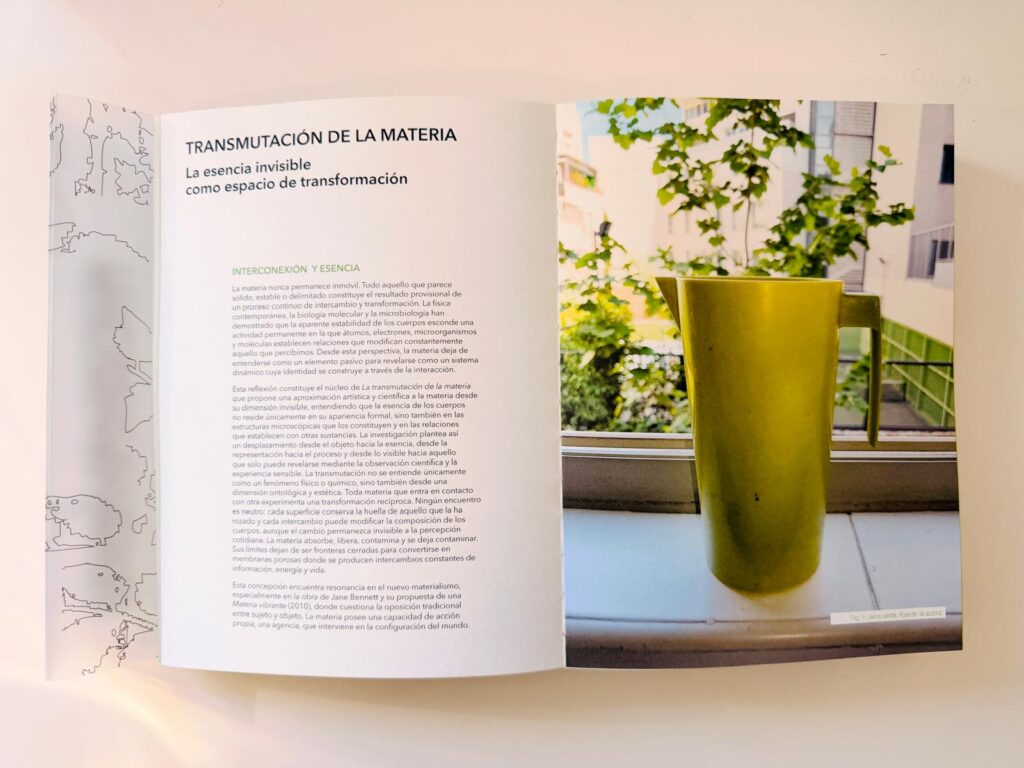
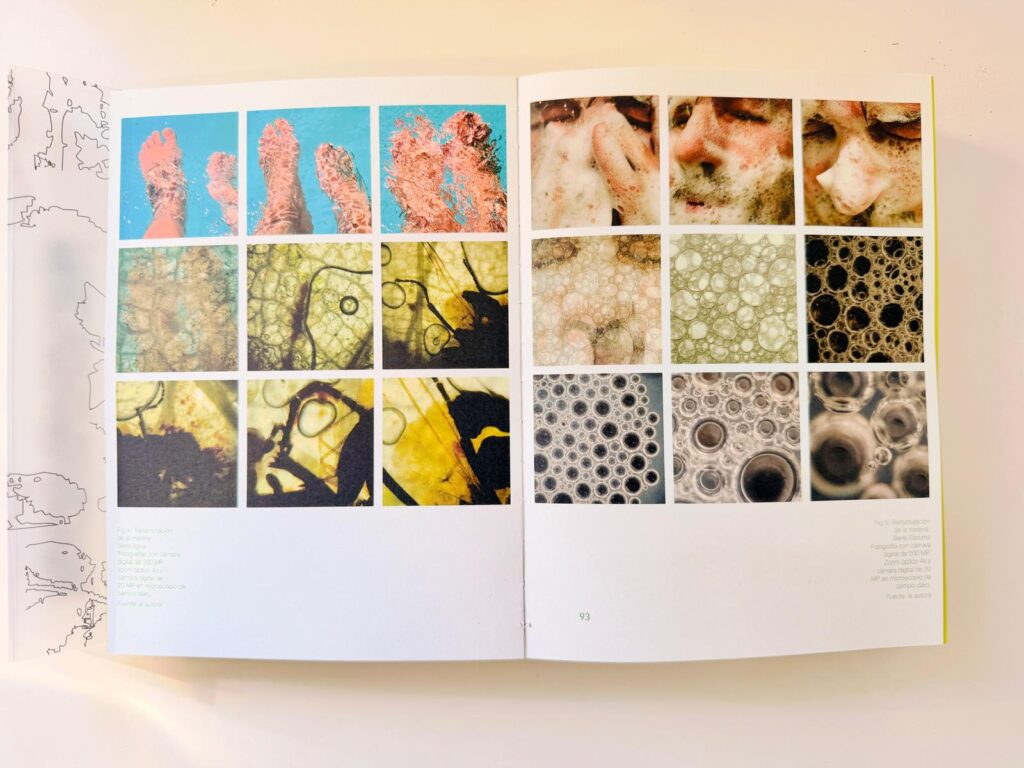
The section Responsibilities Toward Matter and Its Agency begins with Alberto Alarcón, who argues for love of matter as an ethical principle and examines optimisation, repair, and reuse as productive strategies. María Mallo reconstructs a situated trajectory between architecture, art, and life through soft materials, reactive spaces, and living organisms. Rita García Llanes then explores the transmutation of matter and the ways in which skin, water, and earth function as surfaces of exchange. Carolina Borrero analyses Colombian territory as a sculpture shaped by extractivism from a decolonial and postnatural perspective, while Nuria Díaz advocates for arts-based research as an embodied form of knowledge. The section concludes with a collective conversation moderated by Loreto Alonso Tienza.
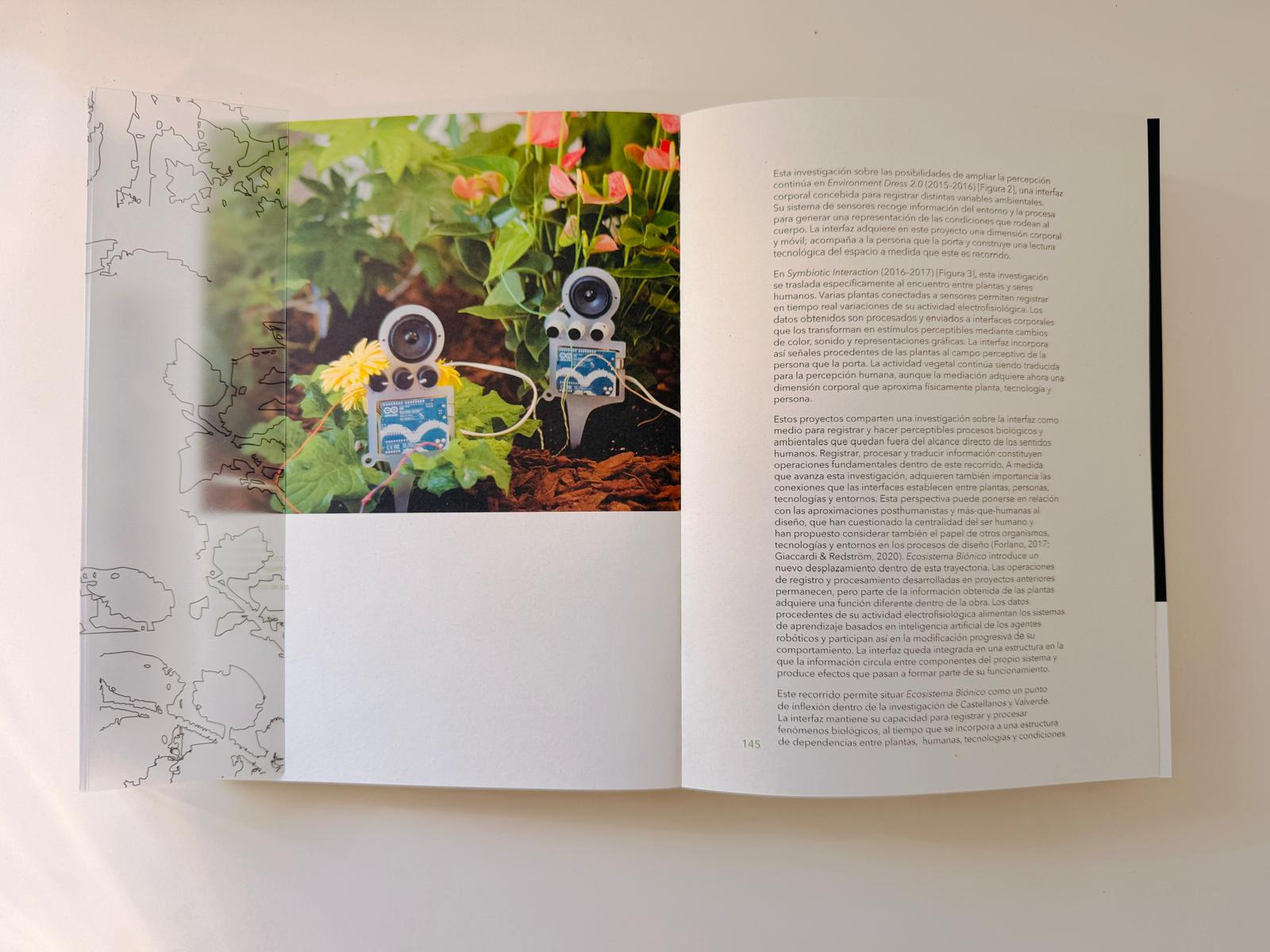
In Expanded Perception, Mediations, and the Limits of the Sensible, María Castellanos presents a bionic ecosystem in which the interface becomes a network of relationships between plants, machines, and humans. Andrea de la Rubia proposes a speculative cyber-herbarium that imagines vegetal hybridisations between northern and southern Iberia in response to climate change. Alejandro Porqueras translates the logic of the photogram into three-dimensional space through superimposed pictorial layers, while Héctor Orruño investigates mimesis, opacity, and relational thresholds within complex systems. Marcos Burgos, in turn, approaches UX design as a strategy for community-based creation aimed at building new social networks. The section closes with a discussion moderated by José Enrique Mateo León.
The third strand, Disciplinary Overflows and More-than-Human Methodologies, opens with Cristina Nieto, who presents Seeds of the House, a collective project for the conservation of agrobiodiversity where science, citizenship, and art converge. Rosemary Lee offers a nuanced reading of artificial intelligence that moves beyond the polarisation of current debates. Kurt Wesp develops a methodology for unconventional uses of visual technology through hybrid painting. Tatiana Lameiro explores the artist’s book as a space of relational materialities, while Elsa Gil investigates mycodesign as a practice of collaboration and care with mycelium. In Wet Realities, Antía Iglesias documents the concluding conversation on the techno-biological overflow of creative disciplines.
In Prospections Toward an Ethics of Co-Habitation, Miguel Sbastida reflects on environmentally activated artistic practices and their methodologies for coral reef restoration. Gabriel Alonso understands climate change as a project rather than an accident and examines climate fiction alongside the politics of imagination. Miguel Trigo analyses housing as a domestic biome and maps forms of coexistence with living materials. Vanessa Abolafio studies the work of Pierre Huyghe as a medium of cohabitation in which living systems reconfigure the notion of the artwork. Finally, Gloria Santacruz explores deep temporalities and postnatural ethics at the intersection of art, ecology, and education.
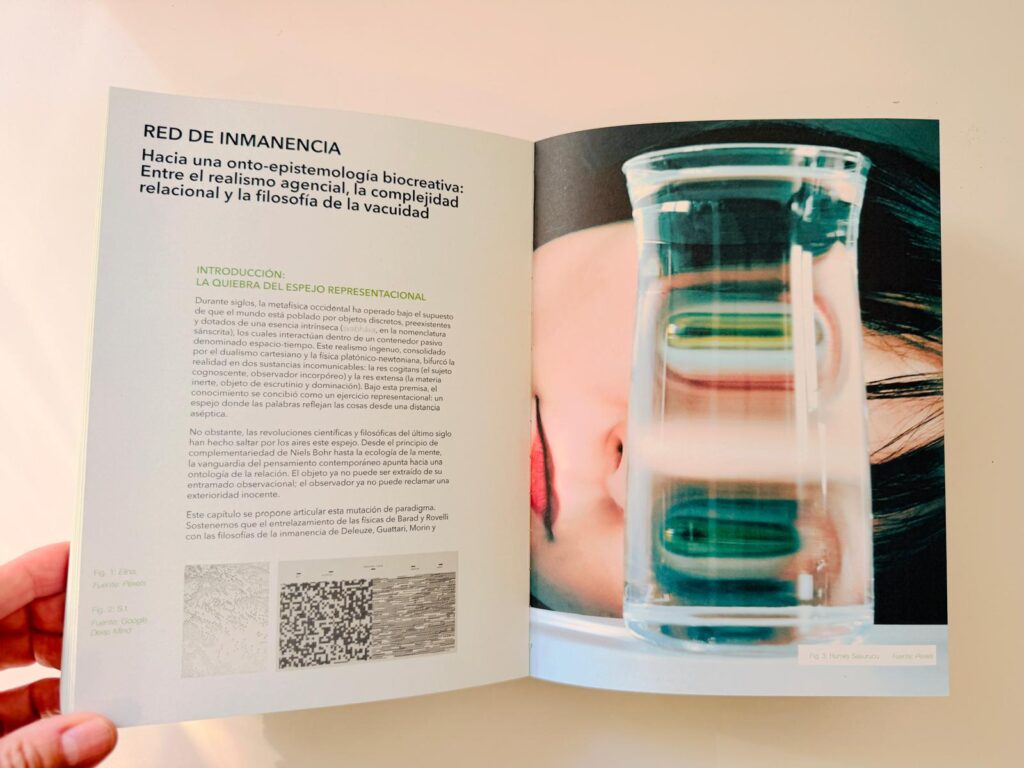
The volume closes with On Drifts and Pathways. José Enrique Mateo returns to the concept of situated knowledges in order to reflect on the responsibility of asking questions. Ángeles Cancela Carral proposes the overflows between art, science, and forest engineering as a pathway toward a transdisciplinary ecology of knowledge. Lastly, Ana Soler Baena concludes with a biocreative onto-epistemological proposal that brings together agential realism, relational complexity, and the philosophy of emptiness.