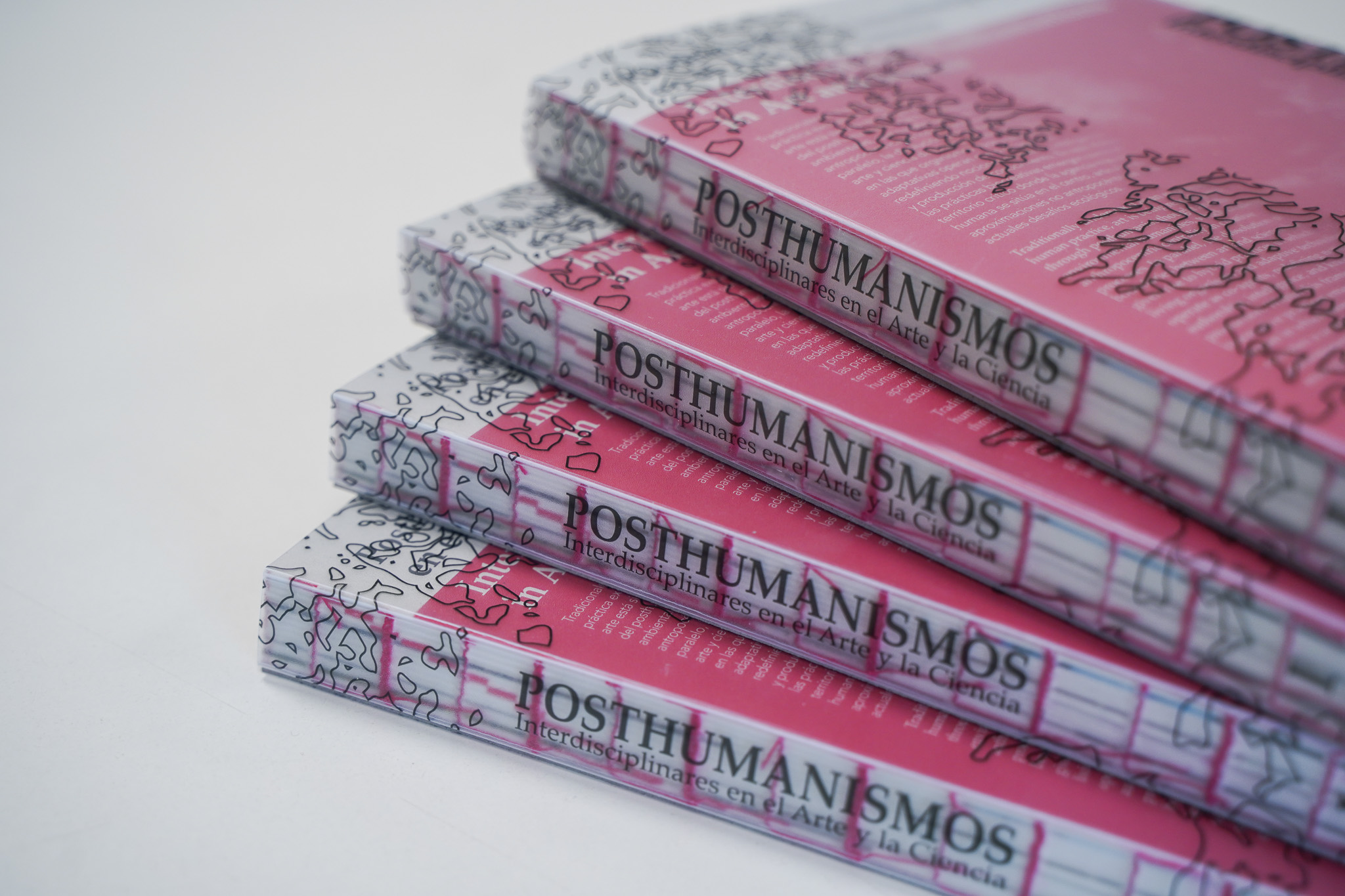
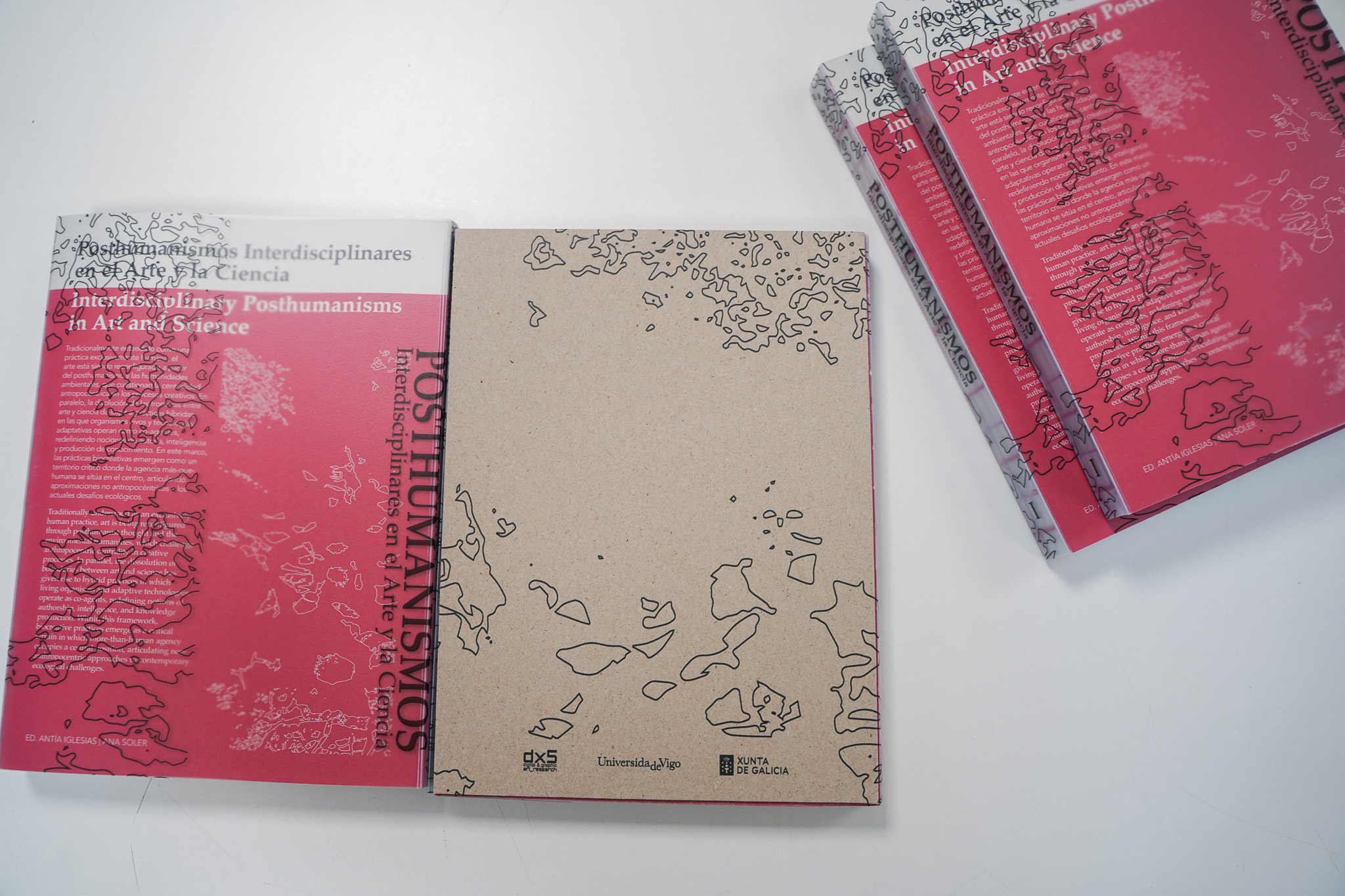
_Interdisciplinary Posthumanisms in Art and Science
_ materia
_ especialidad
_Interdisciplinary Posthumanisms in Art and Science
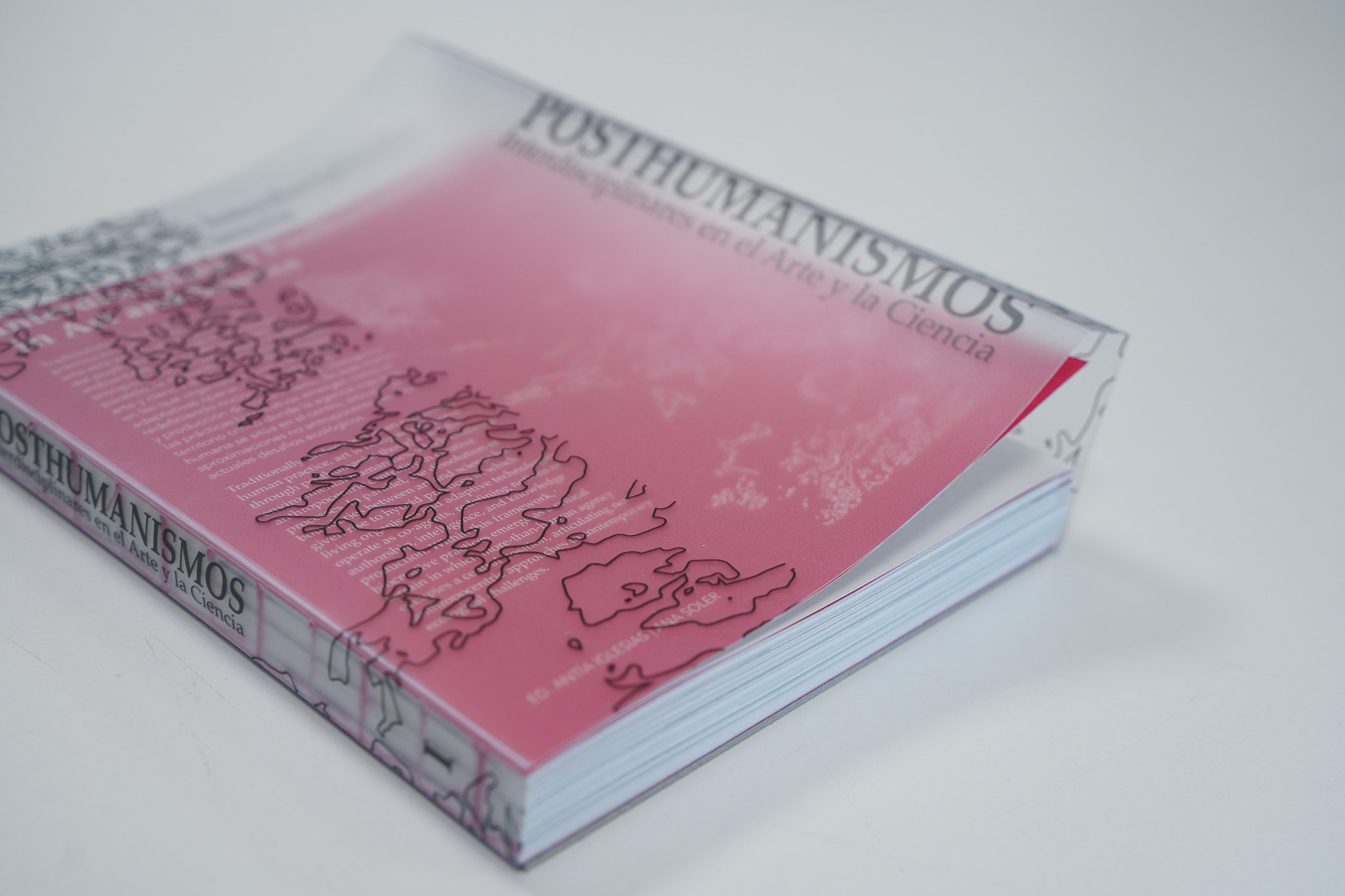
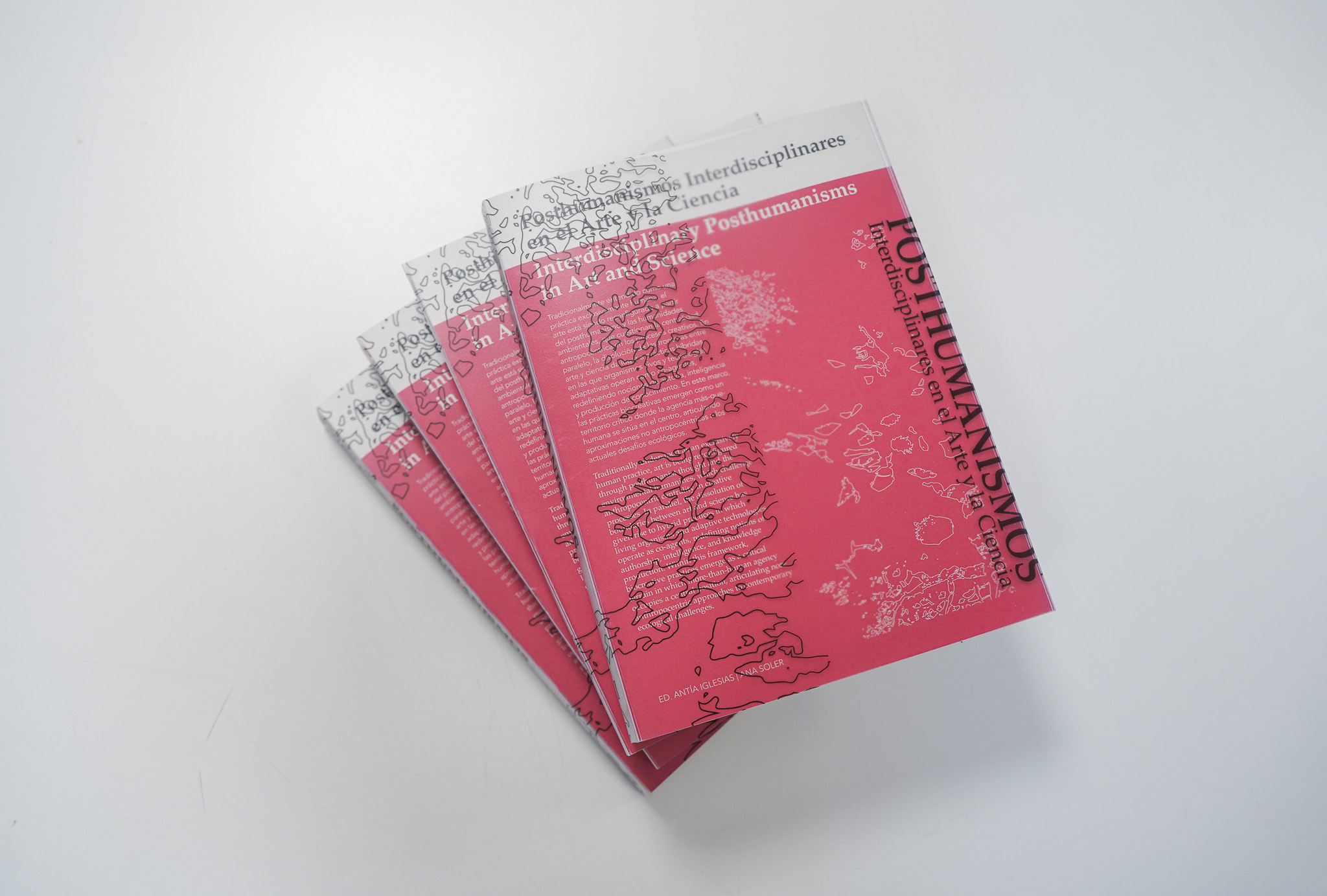
Interdisciplinary Posthumanisms in Art and Science is a publication that emerged from the international seminar series Art at the Edge of Nature, bringing together research presented and developed through the first three editions of the event, held in Spain and the United States. Throughout its pages, it argues that art, understood as an expanded and multiple concept, can no longer be conceived as an exclusively human practice, but rather as a dynamic field shaped by diverse disciplines, perspectives, entities, and agencies through which we relate to one another. From this premise, the volume examines how the dissolution of boundaries between art and science has generated hybrid practices that displace anthropocentric centrality, compelling us to reconsider authorship, intelligence, and the means through which knowledge is produced. Through a collection of essays by invited contributors, the book positions biocreative practices as a critical terrain from which to address contemporary ecological challenges in a collective and, once again, multiple manner. Across its different sections, the volume combines theory and practice, offering a series of reflections that help map a plural field where sustainability, materiality, interdisciplinarity, and future-oriented inquiry converge. Beyond presenting a selection of projects and approaches, the book constructs a framework for understanding how art and science can operate today as complementary practices of ecological exploration and mediation. This publication constitutes the first volume in a series of contributions aimed at mapping the current state of so-called bioart, biomaterialism, biodesign, and related fields at both national and international levels.
_origins
Art at the Edge of Nature is an international seminar series founded by Antía Iglesias in 2024 in New York City, under the auspices of a Fulbright-Xunta de Galicia Fellowship. Since its first edition, the series has promoted research and critical reflection on the state of contemporary bioart and its many dimensions, seeking to establish its place within the history of art and contemporary artistic practice. The seminar series is connected to the research line New Materialities and Ecologies, which emerged from a collaboration between the dx5 Digital & Graphic Art Research group at the Faculty of Fine Arts and the AF4 Agroforestry Engineering research group at the School of Forestry Engineering, both part of the University of Vigo, within the framework of the CREA Doctoral Programme in Creativity and Social and Sustainable Innovation. This line of research, which complements the Bioresources and Art-Science Initiatives research programme currently being developed within AF4, seeks to position the University of Vigo within an international network of interdisciplinary creators, advocating for hybrid and community-based forms of knowledge production.
_focus
Interdisciplinary Posthumanisms in Art and Science is, by its very nature, both interdisciplinary and post-anthropocentric. Knowledge is understood as situated, relational, and co-produced through the interactions between the arts, sciences, technology, experimentation, community, and context. Drawing on Karen Barad’s concept of intra-action, the volume approaches ecological contextuality through the notion of multiple creation: collective, cumulative, and derivative. Within this framework, art emerges as a form of expanded knowledge, while science is presented as a practice capable of recovering imaginative, affective, and cultural dimensions. This approach advances a hybrid epistemology through which to think about biocreativity, more-than-human agency, and the new forms of collaboration required to address the contemporary ecological crisis.
_about the contents
The book is organized into several sections that combine theoretical frameworks, conceptual reflection, and case studies situated at the intersection of art, science, and ecology.
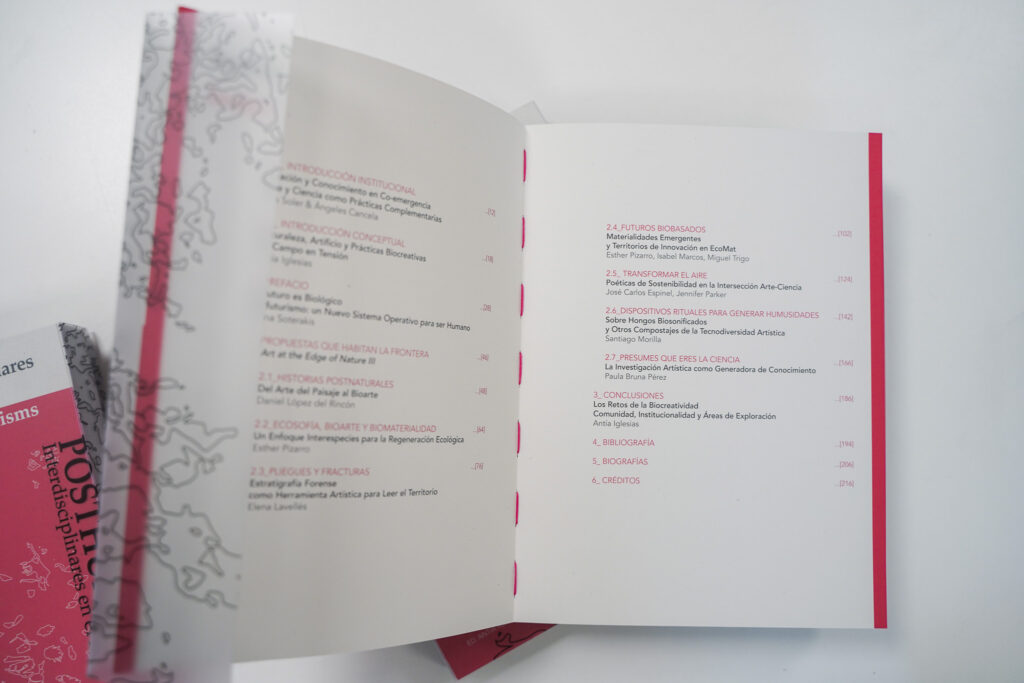
It opens with an institutional introduction by Ana Soler and Ángeles Cancela, who position collaboration between art and science as a form of interdisciplinary knowledge production within the context of the University of Vigo. Building on this foundation, Antía Iglesias develops the conceptual framework by revisiting the notion of nature as a historical construct and proposing biocreative practices from a posthumanist perspective, challenging the traditional dichotomies between nature and culture, and between the human and the non-human.
The preface by Elena Soterakis introduces the concept of biofuturism, presenting bioart as a form of knowledge and a mode of relating to living systems that extends beyond purely aesthetic concerns.
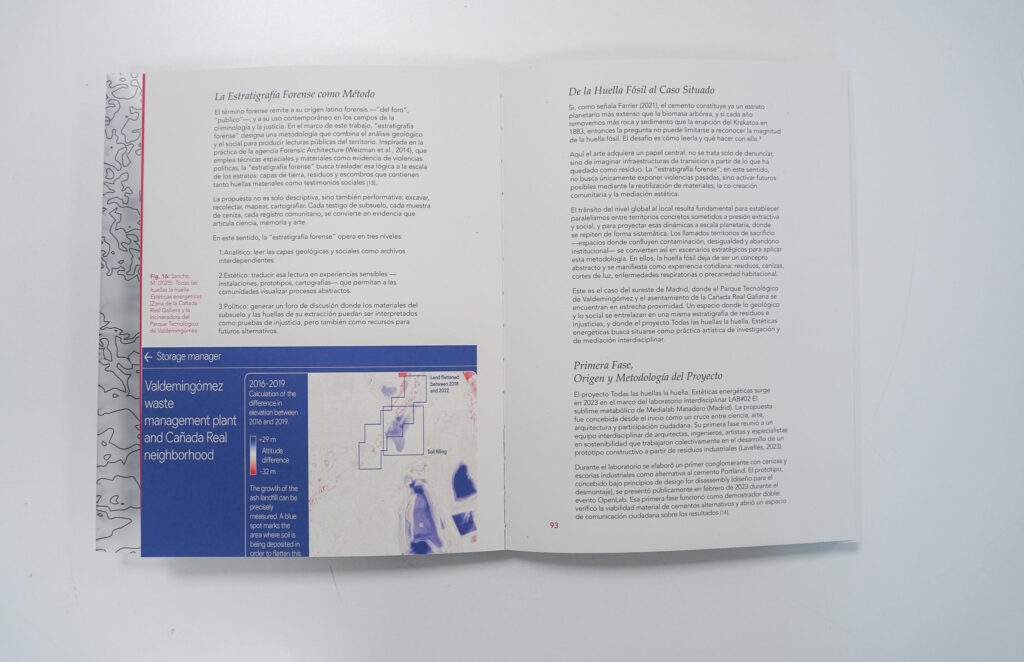
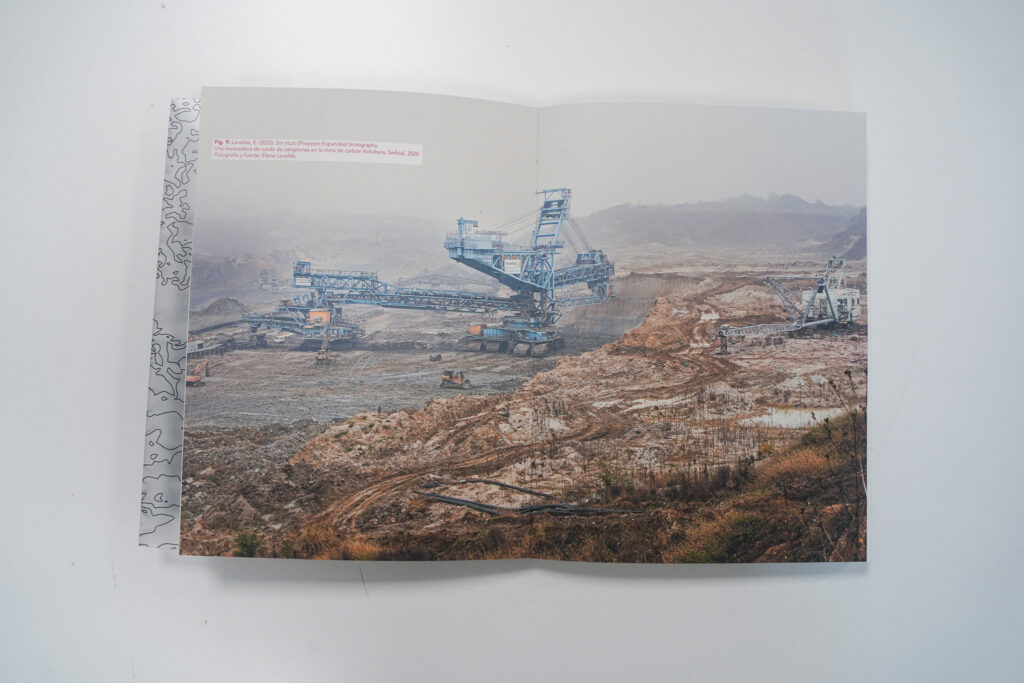
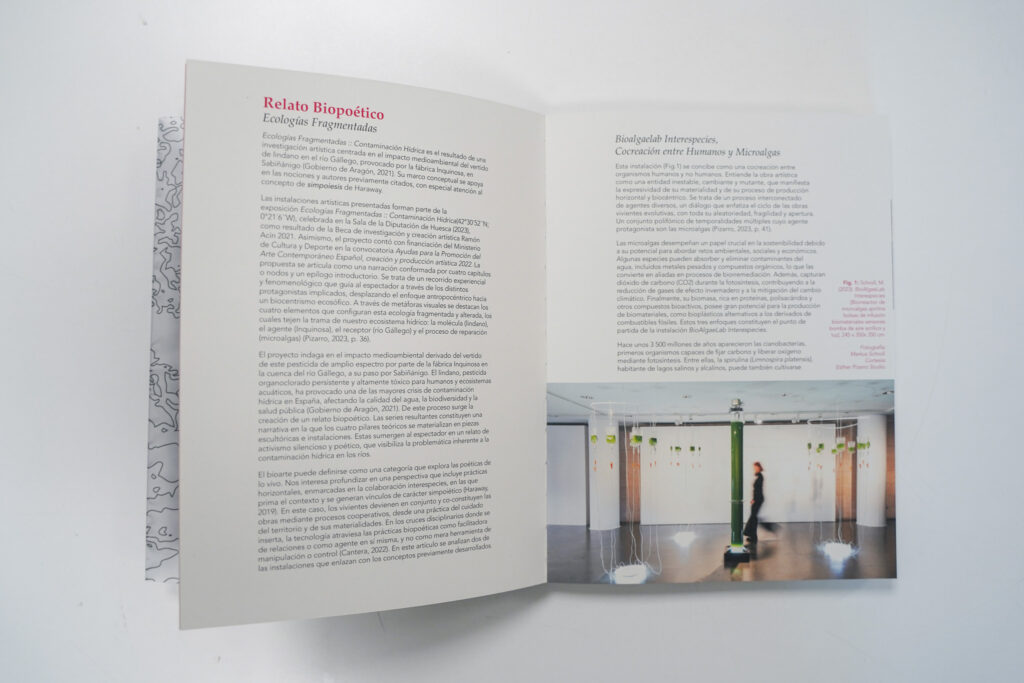
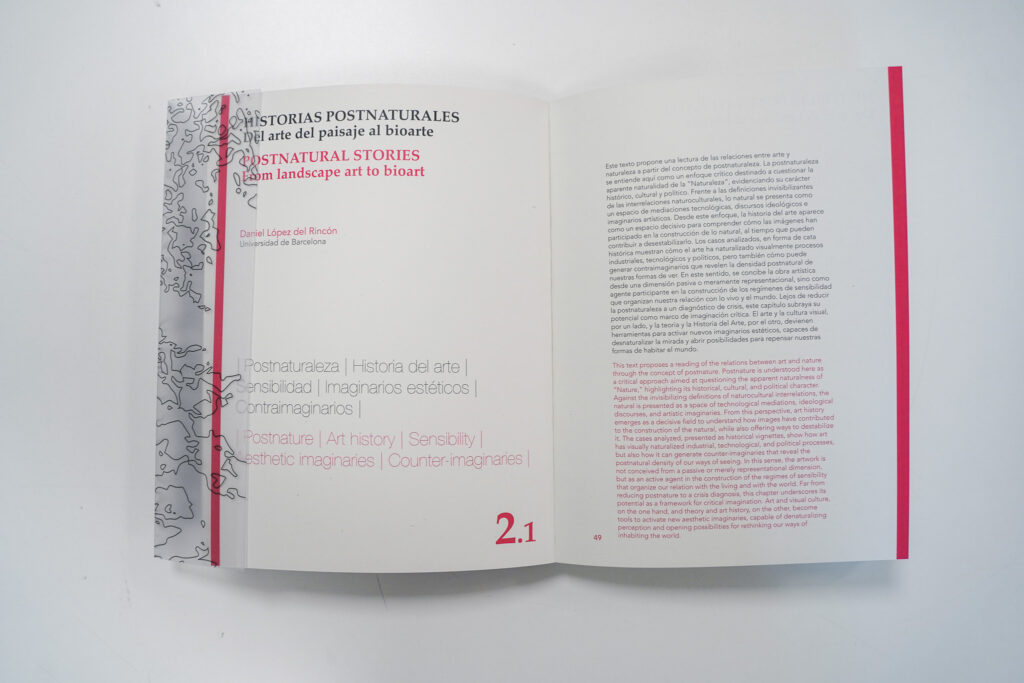
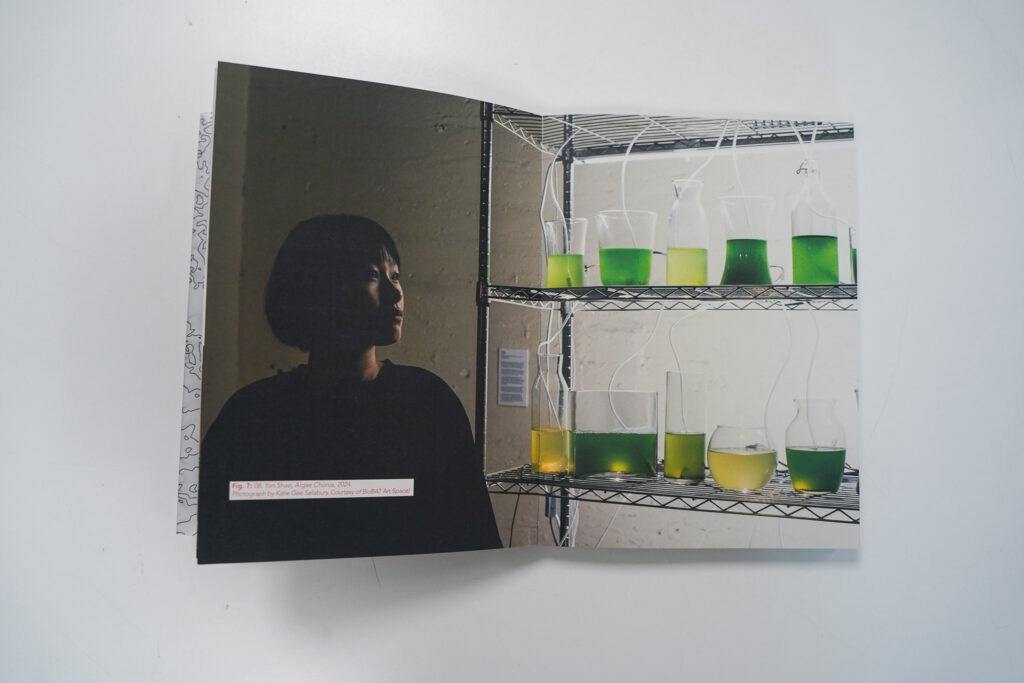
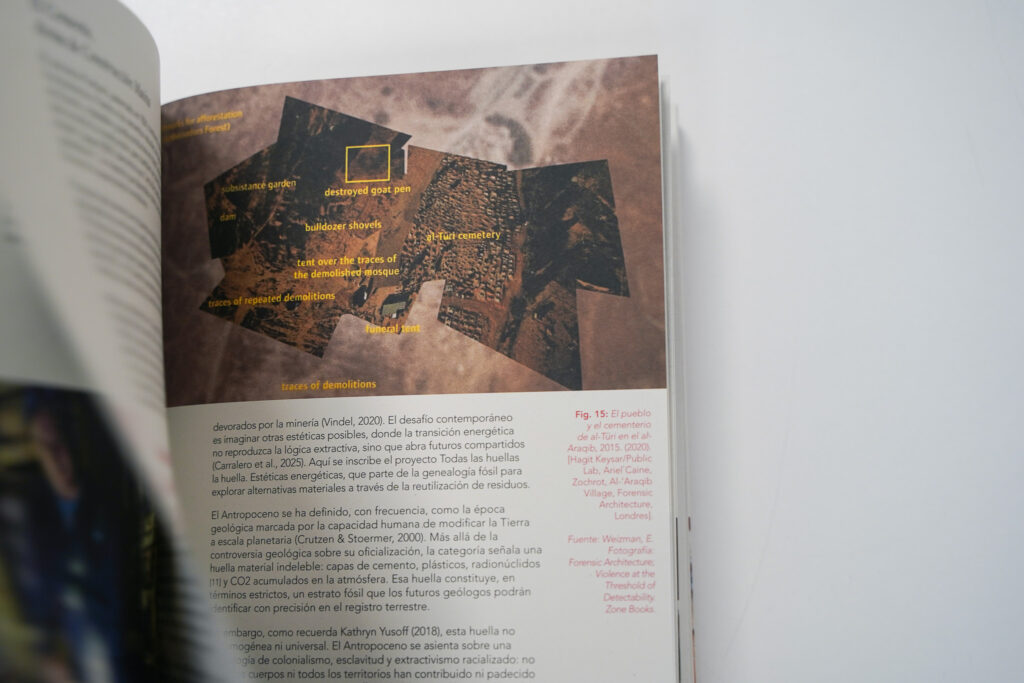
The core of the volume brings together a series of chapters addressing specific case studies and theoretical approaches. Daniel López del Rincón examines how the concept of nature has been constructed throughout art history, proposing the notion of postnature as a framework for understanding contemporary transformations. Esther Pizarro explores the relationship between ecosophy, bioart, and biomaterials through projects dealing with water pollution and living organisms, advancing an interspecies perspective. Elena Lavellés proposes forensic stratigraphy as an artistic tool for reading territory, understanding landscape as a material archive in which ecological, social, and political processes are inscribed.
Meanwhile, Esther Pizarro, Isabel Marcos, and Miguel Trigo investigate bio-based materials as sustainable alternatives, analyzing their properties, classifications, and applications in design and innovation. José Carlos Espinel and Jennifer Parker examine air as both a material and a concept, addressing its ecological, technological, and poetic dimensions while making visible otherwise imperceptible processes related to sustainability. Santiago Morilla presents artistic devices linked to fungi and soils that combine sound, participation, and ecology, proposing collective experiences of engagement with the living world. Finally, Paula Bruna reflects on artistic research as a form of knowledge production, integrating scientific data, fiction, and sensory experience to approach non-human forms of life, particularly plant life.
The book concludes with a chapter by Antía Iglesias that synthesizes the principal challenges of biocreativity, emphasizing the need for interdisciplinary approaches, new institutional structures, and more complex forms of relationship between human beings, technologies, and natural environments.